Wedding photography is one of the biggest line items in most wedding budgets, and for good reason — these are the only lasting record of the day. But the pricing range is enormous, and it helps to know what you’re actually paying for.
The national average
Most couples spend $2,500 to $5,000 on wedding photography. The national average sits around $3,500 for a package that includes one lead photographer, 8 hours of coverage, and an online gallery of edited images. For reference, The Knot’s 2026 Real Weddings Study reports a national average of $3,000 for a wedding photographer.
That said, you can absolutely find photographers at $1,200 on the low end or $10,000+ for high-demand photographers in major cities.
What you’ll pay by tier
Budget ($800–$1,800): Newer photographers building their portfolio, or experienced shooters offering shorter coverage windows (4-6 hours). You’ll typically get a digital gallery with basic editing. Fine for smaller, casual weddings.
Mid-range ($2,000–$5,000): This is where most couples land. Expect a seasoned photographer with a solid portfolio, 6-10 hours of coverage, a second shooter, professional editing, and an online gallery. Many packages include an engagement session.
Premium ($5,000–$10,000+): Established photographers with editorial-quality work, destination wedding experience, and full-day coverage. Often includes albums, prints, multiple shooters, and faster turnaround. Common in cities like NYC, LA, Chicago, and San Francisco.
What affects the price
Location is the single biggest factor. A photographer in Manhattan charges differently than one in rural Tennessee. Cost of living, venue accessibility, and local competition all play into it.
Hours of coverage matter a lot. Most packages are built around 6-8 hours. Adding hours beyond that usually runs $200-$400 per extra hour.
Second shooter adds $500-$1,000 to most packages. Worth it for weddings over 100 guests or venues with multiple ceremony/reception spaces.
Album and prints can add $500-$2,000. Many photographers offer these as add-ons rather than bundling them.
Experience and demand — photographers who are booked a year out can charge more because they can. Simple supply and demand.
Season and day — Saturday weddings in June cost more than Thursday weddings in January. If you’re flexible on timing, you can save significantly.
How to save money on wedding photography
Book early. Photographers often raise prices as their calendar fills up for the season.
Consider off-peak. Friday or Sunday weddings, winter weddings, or weekday weddings often come with discounts of 10-20%.
Skip the album initially. Get the digital files and order an album later through a third-party service. This can save $500-$1,500.
Hire a newer photographer. Someone with 1-2 years of experience and a strong portfolio can deliver excellent results at a fraction of the cost. Look at their full galleries, not just highlight reels.
Reduce coverage hours. If your ceremony starts at 4pm and you plan to leave by 10pm, you might not need 10 hours of coverage. Get ready closer to the venue to cut down on photographer travel time.
Ask about off-peak packages. Many photographers have special pricing they don’t advertise on their website.
Regional cost differences
Costs vary dramatically by market. Here’s a rough breakdown:
- New York City / San Francisco: $4,000–$10,000+
- Los Angeles / Chicago / Boston: $3,500–$8,000
- Dallas / Atlanta / Denver: $2,500–$5,500
- Nashville / Portland / Austin: $2,500–$5,000
- Smaller cities and rural areas: $1,000–$3,000
These are averages — you’ll find outliers in every market.
What to look for beyond price
Price matters, but so does fit. When evaluating photographers, look at full wedding galleries (not just the best 20 shots), check how they handle low-light receptions, read reviews about their communication style, and make sure their editing style matches what you want. A $2,000 photographer whose style you love will make you happier than a $5,000 photographer whose work doesn’t resonate.
Contracts and what to ask before booking
Price is only half the decision — the contract terms determine whether a good price turns into a good experience.
Retainer: Expect to pay a non-refundable retainer to hold your date, commonly 50% of the total package, though some photographers ask for less (20-30%) with the remaining balance due 30-60 days before the wedding. According to The Knot’s photography contract guide, a signed contract plus retainer is standard practice — if a photographer doesn’t ask for either, treat that as a red flag, not a bargain.
Who owns the photos: The photographer almost always keeps copyright. What you’re buying is a print release or personal-use license — the right to print, share, and post the images, not to resell or license them commercially. Most contracts also let the photographer use your photos in their own portfolio, website, and marketing; if you’d rather they didn’t, that has to be negotiated and written in before you sign.
Delivery timeline: Get a specific number of weeks in writing — “12 weeks,” not “10-12 weeks” or “approximately 3 months.” Many photographers deliver a small sneak-peek gallery within the first week or two and the full edited gallery later. Ask what’s included in standard editing versus what costs extra (retouching, additional edited images beyond a set count, rush delivery).
Backup plans: Ask what happens if your photographer is sick or has an emergency the day of your wedding. A professional should have a backup-shooter arrangement or a same-caliber colleague on call, in writing.
Travel fees: If your venue is more than a set radius from the photographer’s base (commonly 25-50 miles), expect a travel fee on top of the package price — sometimes a flat rate, sometimes mileage-based. Confirm this before you fall in love with an out-of-area photographer’s portfolio.
Frequently asked questions
How much does a wedding photographer cost on average? Most couples spend $2,500 to $5,000 on wedding photography, with a national average around $3,500 for a package with one lead photographer, 8 hours of coverage, and an edited online gallery. The Knot’s 2026 Real Weddings Study puts the national average slightly lower, at $3,000.
How much of a deposit do wedding photographers require? A signed contract plus a non-refundable retainer is standard to hold your date, commonly 50% of the total package price, though some photographers use smaller retainers (20-30%) with the balance due 30-60 days before the wedding.
Who owns the copyright to wedding photos? The photographer almost always retains copyright. You typically receive a print release or personal-use license letting you print and share the images, but not resell them or license them commercially — and the photographer can usually use the images in their own portfolio and marketing unless your contract says otherwise.
How long does it take to get wedding photos back? Delivery timelines vary by photographer, commonly 4 to 12 weeks for the full edited gallery, sometimes with a smaller sneak-peek gallery delivered within the first week. Get the exact number of weeks written into your contract rather than a vague estimate.
Do you have to tip a wedding photographer? Tipping is optional but common: $50-$200 per photographer, or roughly 5-15% of the package price, is the standard range. If a second shooter was there, tip them separately.
Don’t forget the tip
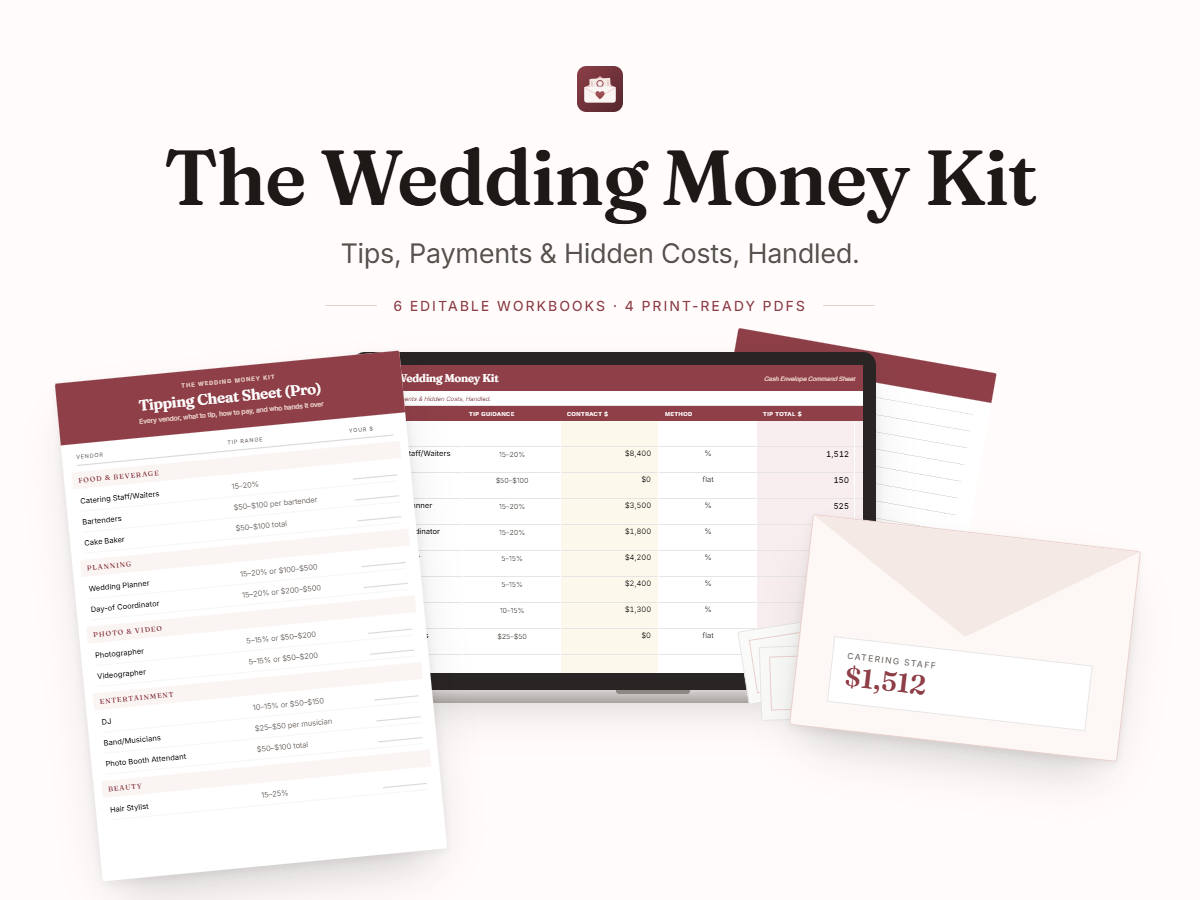
Once you’ve locked in your photographer, budget for a tip too. The standard is $50–$200 per photographer, or roughly 5-15% of your package. If you had a second shooter, tip them separately.
Use our free wedding tip calculator to figure out the exact amounts for all your vendors — it even tells you what cash denominations to request from the bank.
Related guides:
- How much to tip your wedding photographer: the full tipping breakdown by scenario
- Wedding budget calculator: see how photography fits your full budget
- Wedding photographer vs. videographer: deciding whether you need both
Prices reflect 2026 national averages based on industry surveys and wedding planning data. Contract guidance sourced from The Knot’s wedding photography contract guide.