The average U.S. wedding costs about $33,000 in 2026, though the median is closer to $20,000 to $25,000 — meaning half of couples spend less. Knowing your total means nothing if you don’t know how to divide it up. Here’s a realistic breakdown of where wedding dollars actually go in 2026, based on real spending data — not aspirational Pinterest boards.
The average U.S. wedding cost
The national average wedding cost is around $33,000 in 2026 (excluding the honeymoon). But averages are misleading — the median is closer to $20,000-$25,000, meaning half of all couples spend less than that. Your cost depends heavily on where you live, how many guests you invite, and what you prioritize.
The standard budget breakdown
Here’s a realistic percentage allocation that most wedding planners recommend. Adjust based on your priorities — if you care more about food than flowers, shift the percentages accordingly.
Venue: 30-35% ($6,000-$11,500 on a $33K budget). This is the biggest line item and often includes catering at all-inclusive venues. If your venue is rental-only, this percentage drops and your catering allocation increases. See our full guide on wedding venue costs.
Catering & bar: 25-30% ($8,250-$9,900). Food and drinks for all your guests. On a per-person basis, budget $70-$150 for food and $25-$75 for bar service. This is often bundled with the venue. Details in our catering cost guide and bartender cost guide. Price your own with the catering cost calculator and bar calculator.
Photography & videography: 10-12% ($3,300-$3,960). Photos are the only lasting physical record of the day. Don’t cut this too aggressively. Budget split is typically 60/40 between photo and video. See photographer costs and videographer costs.
Music & entertainment: 5-8% ($1,650-$2,640). DJ or live band for ceremony, cocktail hour, and reception. A DJ runs $1,000-$2,500; a live band $3,000-$8,000. Compare in our DJ cost guide and band cost guide.
Flowers & decor: 8-10% ($2,640-$3,300). Bouquets, centerpieces, ceremony arrangements, and decorative elements. One of the most flexible categories. Full breakdown in our florist cost guide.
Wedding planner / coordinator: 5-8% ($1,650-$2,640). Day-of coordination on the low end, full-service planning on the high end. See our planner cost guide.
Attire & beauty: 5-7% ($1,650-$2,310). Wedding dress/suit, alterations, accessories, hair, and makeup. See our hair and makeup cost guide.
Stationery: 2-3% ($660-$990). Save-the-dates, invitations, programs, menus, place cards. Digital options can cut this significantly.
Officiant: 1-2% ($330-$660). Professional officiant fee or donation to religious institution. Details in our officiant cost guide.
Favors & gifts: 2-3% ($660-$990). Guest favors, wedding party gifts, parent gifts.
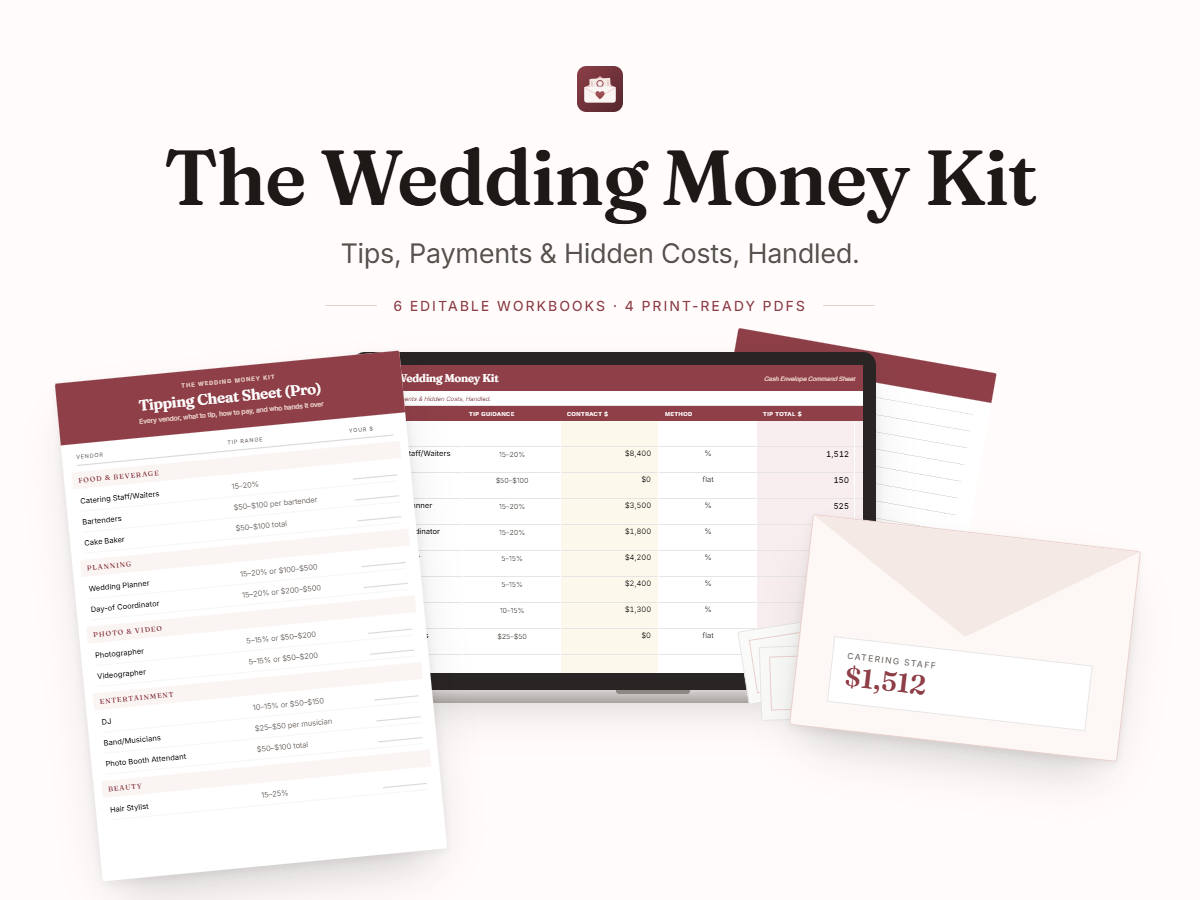
Vendor tips: 5-8% ($1,500-$2,500 for a full vendor roster). Often forgotten in initial budgets. Plan for it early. Use our wedding tip calculator to get exact amounts, and see the data behind that total in our wedding tipping statistics.
Miscellaneous / buffer: 5% ($1,650). Marriage license, guest transportation, welcome bags, unexpected costs. Always have a buffer.
Budget allocation by wedding size
The percentages shift depending on guest count:
Small wedding (under 50 guests): Venue and catering take a smaller share of the total. You can allocate more to photography, entertainment, or splurges that matter to you.
Medium wedding (75-150 guests): The standard percentages above apply well. This is the range most advice is built around.
Large wedding (200+ guests): Catering dominates — often 40%+ of the total. Photography and entertainment stay flat (you don’t need more photographers just because you have more guests), so their percentage share shrinks.
The three things couples overspend on
Based on post-wedding surveys, the three categories where couples most often wish they’d spent less are favors (most guests leave them on the table), stationery (digital invitations are increasingly accepted), and flowers (elaborate installations look great in photos but guests rarely notice the details).
The three things couples wish they’d spent more on
Videography (the number one regret for couples who skipped it), a day-of coordinator (trying to manage vendors yourself on your wedding day is stressful), and the band/DJ (great entertainment makes the reception memorable).
How to use this breakdown
Start with your total budget. Multiply by each percentage to get your target for each category, or let our wedding budget calculator do that math and round the targets so they add up to the dollar. Then adjust based on your priorities. If you love food, pull from flowers and stationery to boost catering. If the dance party is everything, invest in entertainment and cut elsewhere. Once the vendors are booked, map their deposits and balances onto a dated payment schedule so you know what leaves your account and when. If you are not sure when each payment is due, our guide on when to pay wedding vendors covers the typical deposit and balance timing.
The key is making intentional choices rather than letting costs creep up everywhere.
Frequently asked questions
What is the average wedding cost in 2026? The national average is around $33,000 excluding the honeymoon, but the median is closer to $20,000 to $25,000 — meaning half of all couples spend less than that. Cost depends heavily on location, guest count, and priorities.
How should I split my wedding budget? A common allocation is venue 30 to 35 percent, catering and bar 25 to 30 percent, photography and video 10 to 12 percent, music 5 to 8 percent, flowers 8 to 10 percent, planner 5 to 8 percent, and attire and beauty 5 to 7 percent, with the rest going to stationery, officiant, favors, tips, and a buffer.
What is the biggest expense in a wedding budget? The venue is usually the largest line at 30 to 35 percent, and at all-inclusive venues it often includes catering. For weddings of 200 or more guests, catering can dominate at 40 percent or more.
How much should I budget for vendor tips? Plan for roughly $1,500 to $2,500 for a full vendor roster, about 5 to 8 percent of a typical budget. Tips are often forgotten in the initial budget, so set the money aside early.
How much does a small wedding cost? Weddings under 50 guests spend far less on venue and catering, which frees up budget to put toward photography, entertainment, or the splurges that matter most to you.
Don’t forget to budget for tips
Vendor tips are real money, typically $1,500 to $2,500 for a full vendor roster. Our free wedding tip calculator will tell you exactly how much to set aside and what cash denominations to request from the bank.
Related guides:
- How Much Does a Wedding Cost in 2026?: the national averages this breakdown divides up
Budget percentages based on 2026 industry surveys and wedding planning data.