Wedding catering costs $70 to $150 per person on average in 2026 (national average about $85), which puts a 150-guest wedding around $10,500 to $22,500. Per-person pricing can swing from $30 for a casual buffet to $300+ for a premium plated dinner. Catering is usually the single largest line in a wedding budget — often 30-40% of the total — so understanding the pricing structure helps you avoid sticker shock and make smart tradeoffs.
The national average
Most couples spend $70 to $150 per person on wedding catering. For a 150-guest wedding, that’s $10,500 to $22,500. The national average per person is roughly $85, putting a typical total around $12,750. The Knot’s 2026 Real Weddings Study reports catering at about $80 per person.
That per-person number can swing from $30 (casual BBQ buffet) to $300+ (multi-course plated dinner with premium ingredients) depending on your choices.
What you’ll pay by style
Buffet ($40–$80 per person): Guests serve themselves from stations. More food variety, slightly less formal. Generally 15-25% cheaper than plated service. Works great for 100+ guest weddings.
Plated/sit-down ($70–$150 per person): Pre-selected entrees served to each guest. More formal, requires more wait staff. Most common for weddings aiming for an elegant feel.
Family style ($60–$120 per person): Platters placed on each table for guests to share. A middle ground between buffet and plated — feels communal and generous without the buffet line.
Food stations ($50–$100 per person): Themed stations (pasta bar, taco station, carving station) spread around the venue. Encourages mingling and works well for cocktail-style receptions.
Food trucks ($25–$50 per person): Casual, fun, and significantly cheaper. Best for outdoor or rustic-themed weddings. Usually requires multiple trucks for larger guest counts.
The hidden costs
The per-person price for food is just the start. Watch for these extras that can add 20-40% to your total.
Service charge / gratuity (18-22%) is almost always added on top. Read your contract carefully — this is often mandatory and non-negotiable. And heads up: a “service charge” doesn’t always go to the staff. Check out our guide on gratuity vs service charges to understand the difference.
Bar service ($15–$75 per person) varies wildly. Beer and wine only runs $15-30/person. Full open bar with top-shelf liquor can hit $75+/person. Cash bar is cheapest but divisive among guests.
Rentals ($5–$20 per person) for tables, chairs, linens, china, and glassware if the venue doesn’t include them.
Cake cutting fee ($1–$3 per slice) — yes, some caterers charge to cut and serve a cake you brought in from elsewhere.
Overtime ($500–$1,500/hour) if the reception runs long.
What affects the price
Guest count is the biggest lever. Every person you cut saves $70-$150. This is where the “B-list” conversation matters.
Menu complexity — chicken vs. filet mignon is a $20-$40 per person difference. Mixed proteins on a plate cost more than single-protein options.
Dietary accommodations — having vegan, gluten-free, and kosher options alongside standard fare increases kitchen complexity and cost.
Location and season — catering in NYC costs more than catering in Omaha. Summer and fall weddings cost more than winter.
Venue restrictions — some venues require you to use their in-house caterer, which limits your ability to shop around.
How to save money
Reduce your guest list. Cutting 20 guests at $100/head saves $2,000. It’s the most impactful lever.
Choose buffet over plated. The food can be just as good. You’ll save on both food costs and wait staff.
Limit the bar. Beer, wine, and a signature cocktail is perfectly classy and saves thousands compared to full open bar.
Have a brunch or lunch wedding. Daytime meals cost 20-30% less than dinner service.
Skip the late-night snack station. Fun? Yes. Worth $800-$1,500? Debatable.
Negotiate on the service charge. Some caterers have flexibility here, especially for larger events.
The tasting: what to expect
Most caterers offer a tasting as part of the booking process — either free or for a nominal fee ($50–$100). Get the most out of it:
Who to bring: Limit your group to 2–4 people. Too many opinions create noise and slow the process.
What to evaluate: Don’t just assess whether the food tastes good in a quiet room on a Tuesday. Think about scale. Does this dish hold up when prepared for 150 guests and held in warming trays for 20 minutes? Ask the caterer directly how they handle large-volume temperature and texture issues.
Questions to ask at the tasting: How long has this menu been offered? What are the vegetarian, vegan, and allergen-accommodating options? Can you show me photos or video from a similar-sized reception you catered?
Staff ratios and what they mean for service
Your catering contract should specify how many servers and bartenders will be on-site. Industry standards:
- Plated dinner: 1 server per 10–12 guests
- Buffet: 1 server per 25–30 guests (plus station chefs)
- Cocktail hour passed appetizers: 1 server per 25–30 guests
- Bar: 1 bartender per 50–75 guests
If the ratios in your contract are lower, guests will experience slow service. It’s worth negotiating additional staff upfront — typically $35–$60 per extra server for the evening — rather than dealing with 20-minute drink lines at your own wedding.
Contract items to scrutinize
Before you sign:
- Service charge vs. gratuity language: What percentage, and where does it go? Many venues keep the service charge as overhead. Get clarity in writing — see our service charge vs. gratuity guide if you’re unsure of the difference.
- Overtime rates: What happens if your reception runs an extra 45 minutes? Know the cost before you’re surprised.
- Final guest count deadline: Most caterers require a locked headcount 7–14 days prior. Changes after that date typically still get billed.
- Outside food policy: Is there a cake cutting fee ($1–$3/slice) if you bring a cake from another vendor?
- Kitchen cleanup: Who is responsible, and is it included or billed hourly?
Frequently asked questions
How much does wedding catering cost per person? Most couples pay $70 to $150 per person for wedding catering in 2026, with a national average around $85. The per-person figure can run from about $30 for a casual buffet to $300 or more for a multi-course plated dinner with premium ingredients.
How much does wedding catering cost for 150 guests? At $70 to $150 per person, catering for 150 guests runs about $10,500 to $22,500. At the $85 national average, a typical 150-guest total lands near $12,750.
What percentage of a wedding budget is catering? Catering is usually the single largest expense, often 30 to 40 percent of the total budget. At weddings of 200 or more guests it can climb past 40 percent.
Is a buffet cheaper than a plated dinner? Usually yes, because a buffet needs fewer service staff than a plated meal. That said, a premium buffet with carving stations and upscale ingredients can cost as much as a plated dinner.
Do you tip catering staff if a service charge is included? Often yes. A service charge frequently stays with the venue or company rather than the staff, so the standard is to tip $20 to $50 per server directly, or 15 to 20 percent of the pre-service-charge total for the team.
Don’t forget the tip
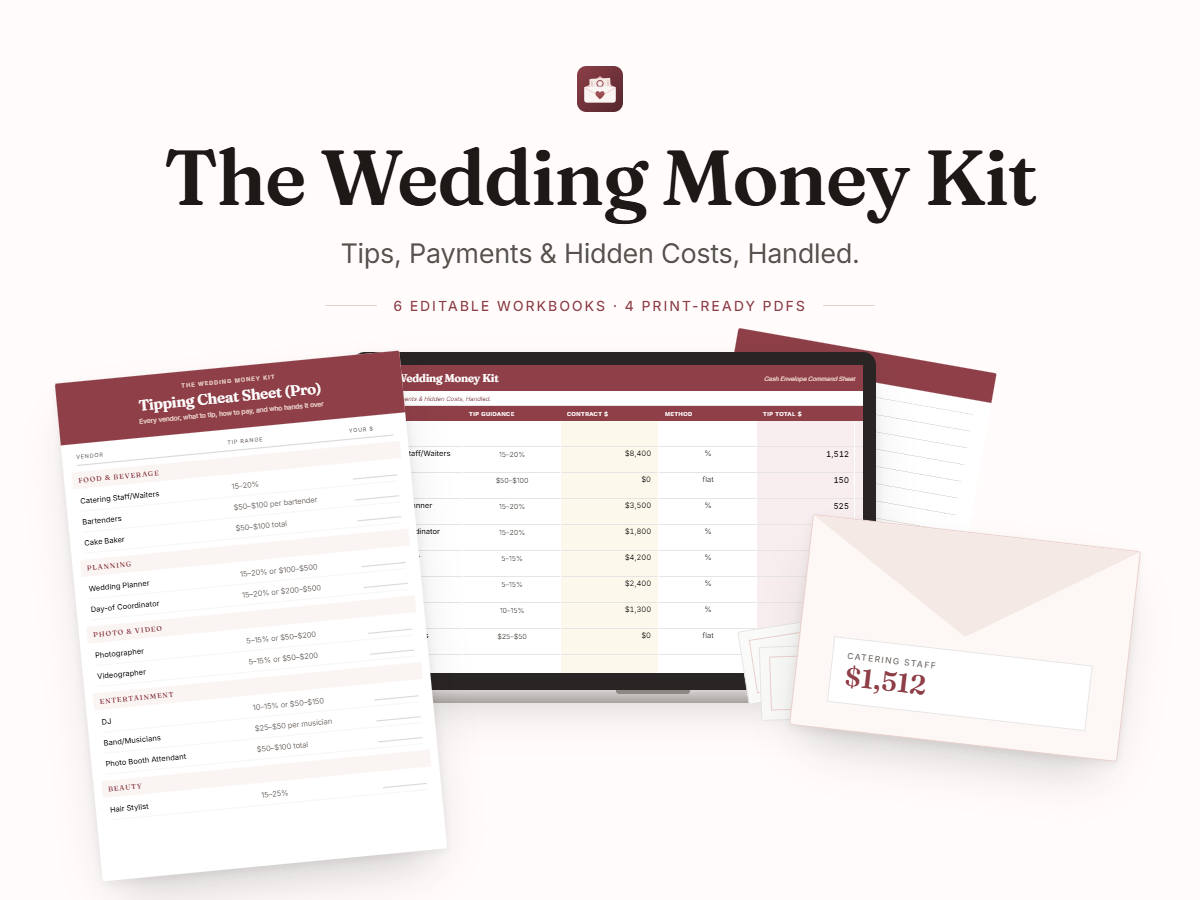
Even if your contract includes a service charge, the catering staff who served your wedding often appreciate a direct cash tip. The standard is $20–$50 per server, or 15-20% of the pre-service-charge total if tipping the team collectively.
Figure out the exact amounts with our free wedding tip calculator, and read our detailed guide on tipping your wedding caterer.
Related guides:
- Wedding Catering Cost Calculator: estimate your full catering cost by guest count and menu style
- Catering Service Charge Calculator: decode a quote you already have
- Buffet vs Plated vs Family-Style: compare the catering styles head to head
Prices reflect 2026 national averages based on industry surveys and wedding planning data.