A wedding DJ costs $1,000 to $2,500 on average in 2026, with a national average around $1,500 for 4-5 hours of reception music, MC services, a consultation, and basic sound. Budget DJs start near $500; premium DJs in major metros run $3,500+. A good DJ keeps the dance floor full and a bad one clears the room — and the price gap between the two is often smaller than you’d think, so it pays to know what you’re shopping for.
The national average
Most couples spend $1,000 to $2,500 on a wedding DJ. The national average is around $1,500 for 4-5 hours of reception music, a consultation, MC services, and basic sound equipment. The Knot’s 2026 Real Weddings Study reports a national average of $1,800 for a wedding DJ.
You can find DJs at $500 on the low end (often solo operators or newer DJs) and $3,500+ for premium DJs in major metro areas with full production setups.
What you’ll pay by tier
Budget ($400–$900): Solo DJs with their own portable sound system. Often newer to weddings or doing it as a side gig. You’ll get music and basic announcements. Adequate for smaller, casual receptions.
Mid-range ($1,000–$2,500): Professional wedding DJs with dedicated sound equipment, wireless microphones for toasts, playlist customization, lighting packages, and MC services. This is the sweet spot for most weddings.
Premium ($2,500–$5,000+): Full production DJs with uplighting, dance floor lighting, fog machines, multiple speakers, and sometimes live mixing or additional musicians. Think club-level sound and atmosphere.
What a DJ actually costs all-in
The quoted package price is not what leaves your bank account. Most cost guides stop at the sticker price; here’s the same three tiers with the add-ons couples most commonly buy and the customary tip included. These are worked examples using the ranges from this page — your mix will differ:
| Budget solo DJ | Mid-range pro | Premium production | |
|---|---|---|---|
| Base package (4–5 hrs) | $700 | $1,500 | $3,500 |
| Ceremony sound | skipped (Bluetooth speaker) | +$300 | included |
| Cocktail hour coverage | skipped | skipped | +$300 |
| One extra reception hour | — | +$200 | included |
| Tip (10–15%, or $50–$150) | +$50 | +$150 | +$350 |
| True total | $750 | $2,150 | $4,150 |
Two things worth noticing in that math. The tip is a real line item — 10% of a premium package is $350 in cash you need on the day, not an afterthought. And extra hours ($150–$300) cost less than the package’s effective hourly rate (a $1,500 package over 4–5 hours works out to $300–$375 per hour), so extending the reception through your DJ is usually better value than it first appears.
DJ contracts also typically split into a booking deposit and a final payment due before the wedding — map both into your payment schedule so nothing lands as a surprise in the final week.
What’s usually included
A standard mid-range DJ package typically covers pre-event consultation and timeline planning, 4-5 hours of music, professional sound system and speakers, wireless mic for toasts and announcements, MC services for introductions and key moments, and basic setup/teardown.
Things that usually cost extra include uplighting ($300-$800), dance floor lighting effects ($200-$500), additional hours ($150-$300/hr), ceremony sound ($200-$400), and cocktail hour coverage ($200-$400).
What affects the price
Experience with weddings specifically matters. A club DJ and a wedding DJ are different skill sets. Wedding DJs need to read a room that includes grandma and your college friends simultaneously.
Equipment quality is a big differentiator. Better speakers, backup equipment, and professional lighting all cost more to own and maintain.
Hours of coverage — most packages are 4-5 hours. Extending into cocktail hour, ceremony, or late-night afterparty adds cost.
Day and season — Saturday evenings in peak wedding season (May-October) command higher rates.
Travel — DJs outside your area may charge a travel fee, typically $0.50-$1.00 per mile beyond 30-50 miles.
How to save money
Book DJ-only for the reception. Use a Bluetooth speaker for ceremony music and cocktail hour instead of paying for extra DJ hours.
Skip the uplighting. It looks great but isn’t essential. If your venue already has good ambiance, save the $500.
Consider a weekday or off-season wedding. DJs are often willing to offer 15-25% discounts for dates that are harder to fill.
Ask about package deals. Some DJs offer ceremony + cocktail hour + reception bundles that cost less than booking each separately.
Provide your own playlist as a starting point. This saves the DJ prep time, which some will pass along as a small discount.
Questions to ask before booking
A good DJ reads the room, runs your timeline, and serves as MC. Screen carefully:
- Can I see video from an actual wedding reception you worked? Mixtapes on SoundCloud aren’t the same as hearing how they handle a toast announcement, a request from grandma, and a transition into dinner music. Ask for clips from real events.
- Are you the DJ who will actually be at my wedding, or do you subcontract? Some DJ companies act as agencies. If so, you need to meet and vet the actual person who’ll be there.
- How do you handle song requests — from me in advance, from guests during the reception, or both? This reveals their philosophy on your event versus their own preferences.
- Do you have backup equipment on-site? Laptops fail, hard drives glitch. A professional brings redundancy.
- What’s your policy if you can’t make it on the day? Every pro should have a backup plan in writing.
Planning your reception timeline with your DJ
Your DJ needs more than just a song list. Plan a pre-wedding meeting that covers:
Key moments to script together: Grand entrance format and songs, first dance and parent dances (exact titles, exact cuing), cake cutting timing, bouquet toss if applicable, and what you want the last song of the night to feel like.
Do Not Play list: This is as important as your playlist. If there’s a song that will clear the floor, clear the room, or create family awkwardness, put it on the list. Good DJs will ask for this proactively.
Crowd-reading notes: Tell them who your crowd is. If it skews older and you want dancing mixed with conversation, say so. If you want the floor packed from cocktail hour onward, make that clear too. This information directly affects song selection and volume levels.
2026 pricing context
DJ pricing has been relatively stable compared to other wedding vendors. The main shifts:
- Uplighting is increasingly bundled. As LED hardware costs have dropped, many mid-range DJs now include basic uplighting in base packages rather than charging $300–$800 as an add-on.
- Hybrid live/DJ acts are trending. A DJ paired with a live saxophonist, percussionist, or vocalist typically runs $500–$1,000 more than a solo DJ and is increasingly available at the mid-range price point.
- Remote planning is now standard. Most DJs offer virtual consultation meetings, which makes it easier to book quality talent from outside your immediate area.
DJ vs. live band
A live band typically costs $3,000 to $10,000 — roughly 2–4x what a DJ costs. Bands bring undeniable energy but also come with more logistical requirements (space, breaks, meal provision). Many couples split the difference with a DJ who brings one or two live musicians.
Frequently asked questions
How much does a wedding DJ cost on average? Most couples spend $1,000 to $2,500 on a wedding DJ in 2026, with a national average around $1,500 for 4 to 5 hours of reception music, a consultation, MC services, and basic sound equipment.
Why does a wedding DJ cost more than a party DJ? A wedding DJ’s price includes more than music: MC duties, a planning consultation, timeline coordination with your other vendors, and backup equipment in case something fails. You are paying for reliability on a day that cannot be redone.
Is a wedding DJ or a live band cheaper? A DJ is far cheaper. A wedding DJ runs $1,000 to $2,500, while a live band typically costs $3,000 to $10,000 — roughly two to four times as much.
What do you get with a premium wedding DJ? At $3,500 and up you are usually hiring an established DJ in a major metro with a full production setup. The gap in skill between a budget and a premium DJ is often smaller than the price gap suggests, so read reviews carefully.
Do you tip a wedding DJ? A tip of $50 to $150, or 10 to 15 percent of the fee, is standard. If the DJ brought assistants or a second operator, tip them separately, usually $25 to $50 each.
Don’t forget the tip
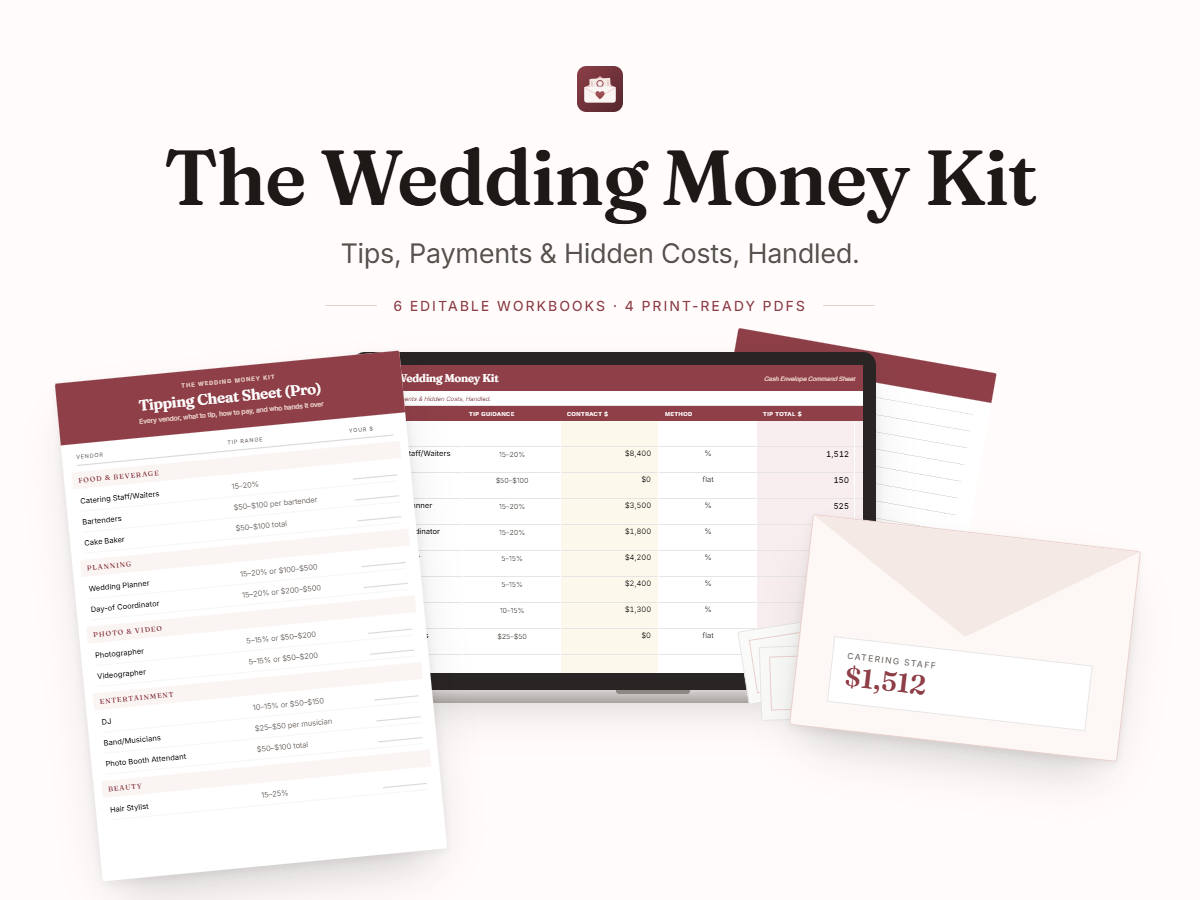
Wedding DJs typically receive a tip of $50–$150, or 10-15% of their fee. If the DJ had assistants or a second operator, tip them separately ($25-$50 each).
Our free wedding tip calculator makes it easy to figure out tips for your DJ and every other vendor. Want to see where entertainment fits in your budget? The calculator splits your total across every category.
Check out our full guide on how much to tip your wedding DJ for more specifics.
Prices reflect 2026 national averages based on industry surveys and wedding planning data.