The banquet captain is the most influential vendor at your reception, and most couples don’t know to tip them separately. They’re the person who decides when the kitchen plates the entrée, when servers clear, when bread baskets get refilled, and how to handle that one guest who’s allergic to everything. A great captain makes a wedding reception feel effortless. A bad one makes it feel chaotic.
Tip them their own envelope.
Standard tip for the banquet captain
$50–$200 above the general catering staff tip.
| Reception size | Captain tip range |
|---|---|
| 50–80 guests | $50–$75 |
| 80–150 guests | $75–$125 |
| 150–250 guests | $100–$175 |
| 250+ guests | $150–$200 |
This is in addition to the general catering staff tip (typically $20–$50 per server). The captain gets paid first as the lead, then distributes the rest among the team.
Who the banquet captain is
Different venues use different titles for the same role:
- Banquet Captain (most common at hotels and dedicated venues)
- Catering Manager (caterers, sometimes used interchangeably with captain)
- Maître d’ (more formal venues, fine-dining catering)
- Floor Manager or Lead Server (smaller venues, less formal vocabulary)
If you’re not sure who plays this role at your wedding, ask the venue or caterer 2 weeks ahead: “Who will be running the floor on the wedding day, and what’s their name?”
Why a separate envelope makes sense
You’re already tipping the catering staff (15–20% of the food bill, or $20–$50 per server if gratuity isn’t in the contract). The general practice is to put that tip in one envelope marked “Catering Staff” and hand it to the captain to distribute.
The captain takes their own share from this envelope as the lead. But that’s still wage compensation for their hourly work — not specific recognition for the supervisory role they played.
A second envelope explicitly for the captain says: “You ran the entire service. Thank you specifically.”
It’s the difference between tipping the team and tipping the leader.
When to hand it over
End of the reception, as guests are leaving. Find the captain (they’re usually circulating at this point, signing off on closeout) and pass the envelope quietly:
“Thank you so much for everything tonight. This is just for you.”
Don’t worry if the moment is brief — captains are professionals and used to this. They’ll remember.
If you can’t find them at the end of the night (busy reconciling with the kitchen), hand the envelope to your planner or the catering manager with: “This is for the captain — please make sure they get it tonight.”
The captain envelope structure
Two envelopes, two purposes:
- “Catering Staff (please distribute)” — contains the general staff tip, given to the captain to hand out among servers and bussers.
- “For the Banquet Captain” — given directly to the captain. They keep this entire envelope.
Pre-fill both envelopes the night before. Stack them with your other vendor envelopes for your coordinator to deliver.
When the captain has been exceptional
If your captain handled something genuinely difficult — a guest fell ill mid-dinner, the kitchen ran behind, two tables had wrong meals delivered, a vendor showed up unannounced — and they fixed it without you ever knowing or worrying, tip at the high end ($150–$200) regardless of guest count.
This is the kind of work that doesn’t show up in a contract but defines whether your reception felt smooth or stressful.
When the contract has a service charge
The catering or venue contract often has an 18–22% service charge. Read carefully:
- “Gratuity included and distributed to staff (including captain)” — the captain gets a share via this. A $50–$100 separate envelope is a personal touch but not strictly required. Lean toward giving it anyway.
- “Service charge” with no clarification — likely belongs to the company, not the captain. Plan to tip the captain separately.
For full guidance, see our service charge vs. gratuity guide.
What the captain actually does on your wedding day
To understand why this person is worth a dedicated tip, here’s what they’re handling:
- Setting up your dining room before guests arrive (table placement, linen, glassware, napkin folds)
- Coordinating with the kitchen on entrée timing relative to your reception schedule
- Briefing all servers on your specific menu, dietary restrictions, and any VIP guests
- Walking the floor during dinner to spot problems before they become problems
- Managing the bar service alongside dinner service
- Coordinating with your DJ/band on toast timing and meal courses
- Handling guest complaints discreetly (someone wanted a different protein, someone needs gluten-free, etc.)
- Coordinating dessert and cake-cutting service
- Managing the closeout and final cleanup
This is a 6–10 hour leadership shift. $100 in their pocket on the way out is a small acknowledgment of the role.
The bottom line
The banquet captain runs your reception. Whatever you’re tipping the catering team, give the captain their own $50–$200 envelope on top. This is in addition to (not instead of) the general staff tip.
For most weddings, $100 is the right number. Pre-load it the night before, hand it over at the end of the night, and consider it the best $100 you spent on tips because it goes to the person who most directly shaped how your reception felt.
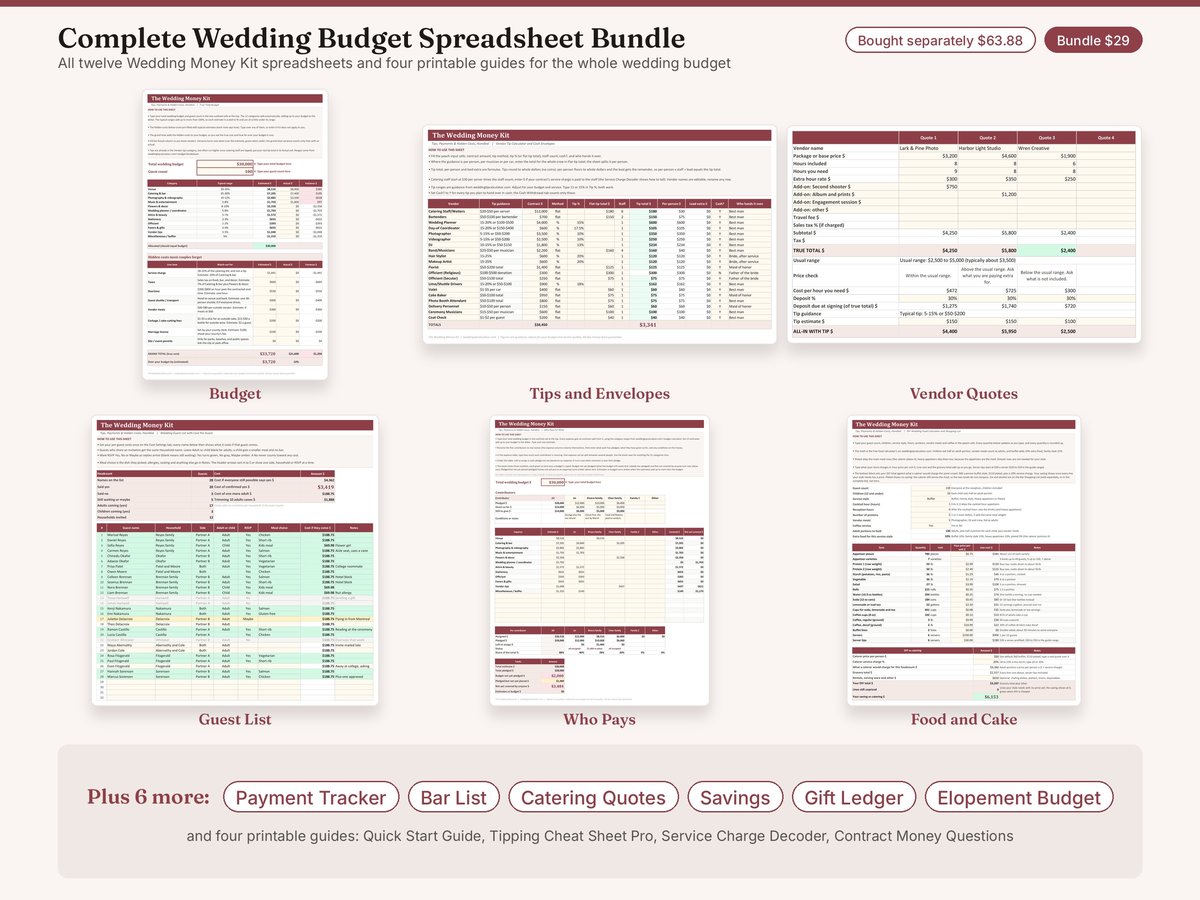
Plan your full tip envelope stack. Open the calculator →
Related guides: